Social Media Proposal Template: A Section-by-Section Guide
Social media proposal template: map client goals to scope, deliverables, pricing, and next steps with a worked example and a practical review checklist.
By Social Media Manager Kit by Cosmo Suite · Editorial policy
Published · 8 min read
A proposal can look polished and still leave the client asking what happens after they say yes. That often means the plan, deliverables, limits, or next step need more detail.
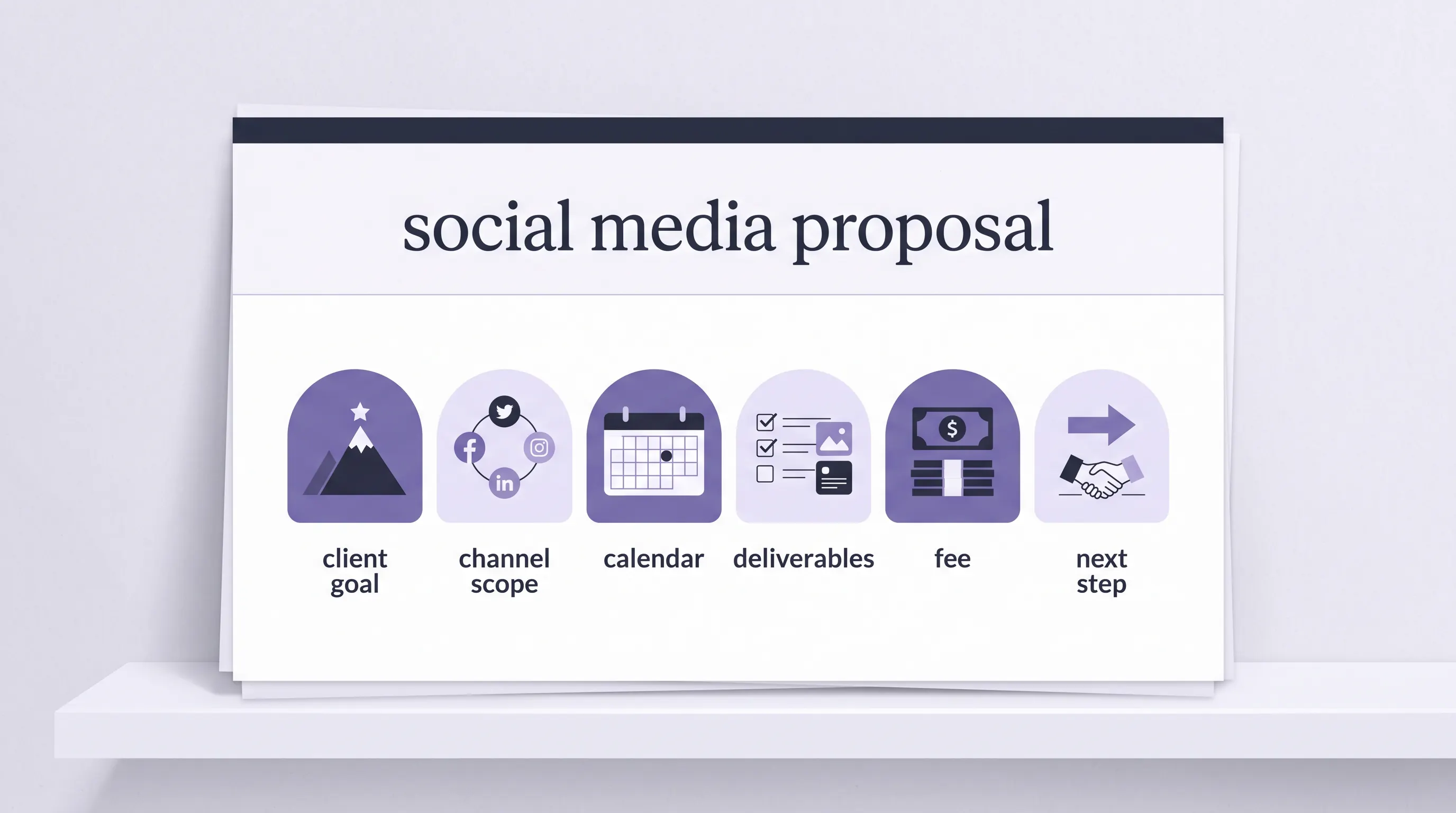
A useful social media proposal connects the client’s stated goal to specific work, a fee, a timeline, and responsibilities on both sides. Its job is to help the client decide whether the proposed work fits. This guide lays out the sections in order, then works through one fictional example so you can see how the pieces fit.
Key takeaways
- Lead with the client’s goal and your recommendation.
- Define deliverables with a quantity or clear boundary.
- Show client inputs, timing, fees, exclusions, and the next step.
- Keep proposal scope distinct from legal terms in a contract.
What a social media proposal needs to do
A social media proposal should help a prospective client answer three questions: did you understand the problem, what work do you recommend, and what will it cost? Put those answers before long background material or design details.
A social media proposal is a document that describes work a manager recommends to a prospective client. A scope of work is the list of tasks and boundaries that defines what the service covers. An exclusion is work that falls outside that scope and needs a separate decision.
Start with what the client told you, not a generic promise. If the client says posting is inconsistent, explain the workflow you recommend to address consistency. Do not turn that statement into a promise of more followers or sales. Those outcomes depend on factors outside the proposal’s scope.
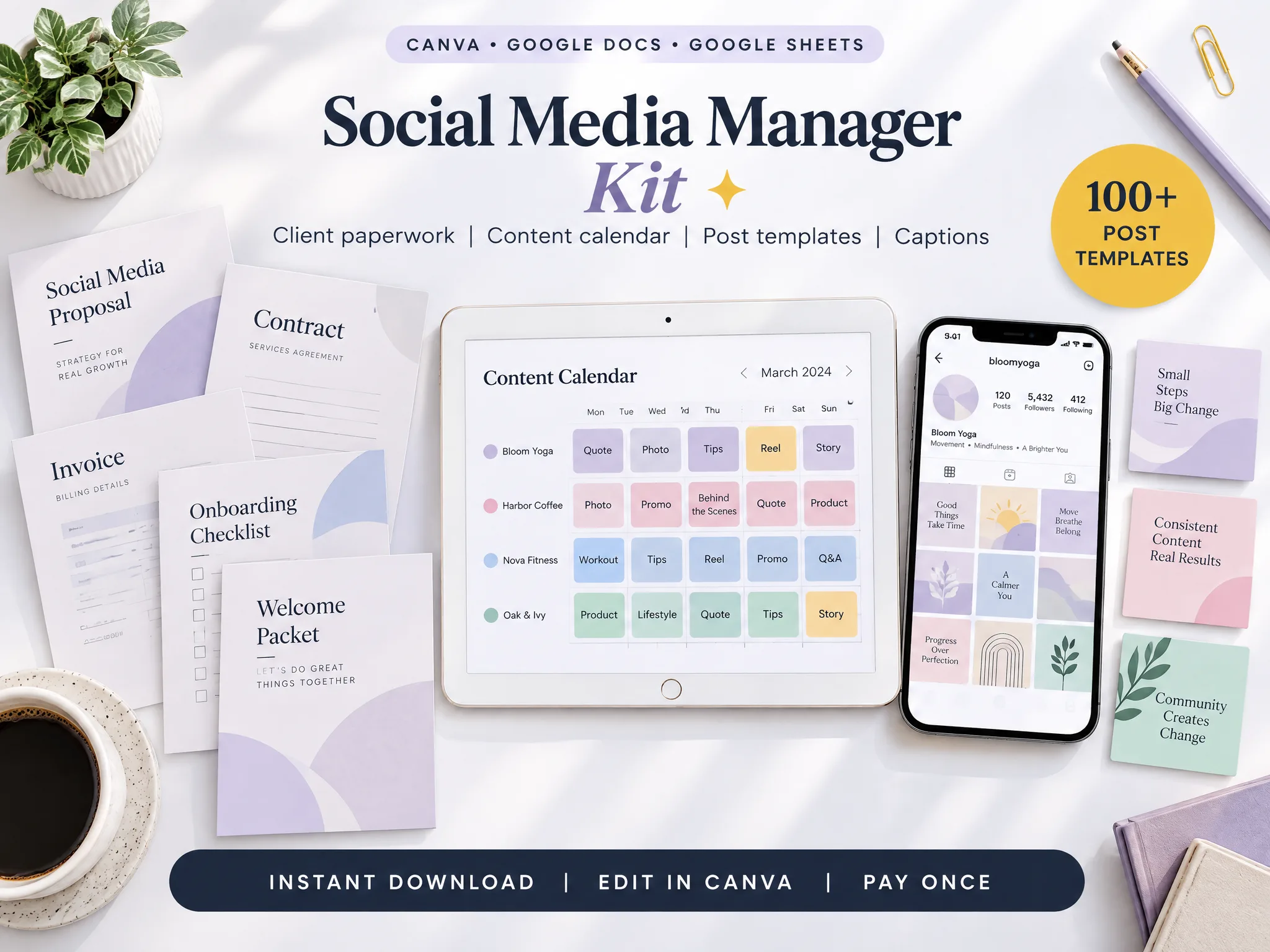
Keep the proposal separate from the contract. It can summarize the proposed service and identify assumptions, while a contract records the terms the parties agree to. Cornell Law's Legal Information Institute describes a contract as an agreement that creates enforceable duties. Its entry on agreement notes that the word can have a broader meaning, and rules vary by jurisdiction. The Social Media Manager Kit client paperwork and planning files include a proposal and a contract file to edit; choose and adapt materials to your own process and ask a qualified professional to review legal terms.
Social media proposal sections at a glance
Use the following order as a starting point. Combine or remove sections when the project is simple, but keep the decision details easy to find.
| Section | What to write | Why it belongs |
|---|---|---|
| Client summary | Their goal and current situation | Shows the recommendation responds to their brief |
| Recommended approach | Channels, audience focus, and working method | Explains the direction before listing tasks |
| Scope and deliverables | Work, quantities, formats, and boundaries | Defines what the service includes |
| Timeline and workflow | Milestones, delivery dates, and dependencies | Makes timing and handoffs visible |
| Client responsibilities | Source material, product details, and a contact for decisions | Shows what the manager needs from the client |
| Fees and assumptions | Fee beside the work it covers; items priced separately | Makes the cost understandable |
| Exclusions and next step | Out-of-scope work and how to proceed | Prevents unclear expectations after delivery |
This sequence moves from the client’s situation to a decision. The proposal should let someone scan the recommendation, compare it with the price, and see what happens next. Avoid burying exclusions or client responsibilities in small print.
Open with the client’s goal and your recommendation
The opening should restate the client’s need in plain language, then give your recommendation in a few sentences. This lets the client check whether you understood them before reading the detailed scope.
For example, imagine a neighborhood bakery wants to post more consistently and show its seasonal menu. A proposal could say: “You want a reliable Instagram and Facebook plan that highlights weekly products. We recommend a monthly content workflow with planned posts, captions, and design support. The bakery supplies product details and photos by the agreed date.”
That summary connects the requested work to the bakery’s needs and names one dependency: the bakery supplies current product details and photos. A discovery call checklist can help organize the information that belongs in this section.
Do not paste a full discovery transcript into the proposal. Choose the details that affect the recommendation: which channels matter, what content the client can supply, what the current bottleneck is, and what they expect you to own.
Define scope as work the client can count
Scope is clearest when each line names an activity, a quantity or boundary, and the output. “Manage Instagram” is hard to price because it could mean very different things. “Prepare eight feed posts per month, including captions and static designs” is easier to understand and review.
Here are three illustrative package shapes for the fictional bakery. Their quantities are examples, not benchmarks or rate recommendations:
| Package shape | Example scope | Boundary |
|---|---|---|
| Planning | One monthly plan for Instagram and Facebook | The bakery prepares and publishes its own content |
| Plan + content | One monthly plan and eight feed posts across those channels | Includes captions and static designs; no video |
| Expanded content | One monthly plan and twelve feed posts across those channels | Includes captions and static designs; no video production |
These quantities are placeholders. The example makes visible decisions that the phrase “social media management” can hide: platforms, formats, volume, and who prepares and publishes the posts. If a task has no quantity or limit, decide whether to define one, price it separately, or exclude it.
The social media management pricing guide shows how service scope connects to package fees. A proposal should put the actual fee beside the actual work, rather than borrowing a number from a generic template.

Make timing and client responsibilities visible
A timeline needs to show your work and the client’s handoffs. Name the stages that affect delivery, such as receiving source material, preparing the content plan, and handing over finished files. Use dates only after you confirm the client’s availability and your own capacity.
For the bakery example, the first planning cycle could begin after the bakery shares menu details and brand assets. Set dates for preparing the plan, creating the posts, and handing over the finished files. If the source material arrives late, later delivery dates may move. State that dependency in the proposal.
List the client inputs you need: current offers, product details, usable photos, and brand files. Name who supplies each item and when. A named client contact can answer questions about product details and dates.
The content calendar template for planning posts by client and date can hold the working schedule once the client accepts the proposal. The proposal sets the responsibilities and delivery dates; the calendar tracks the individual content items. The Social Media Manager Kit paperwork and planning files offer editable starting points for these handoffs.

Put fees beside assumptions and exclusions
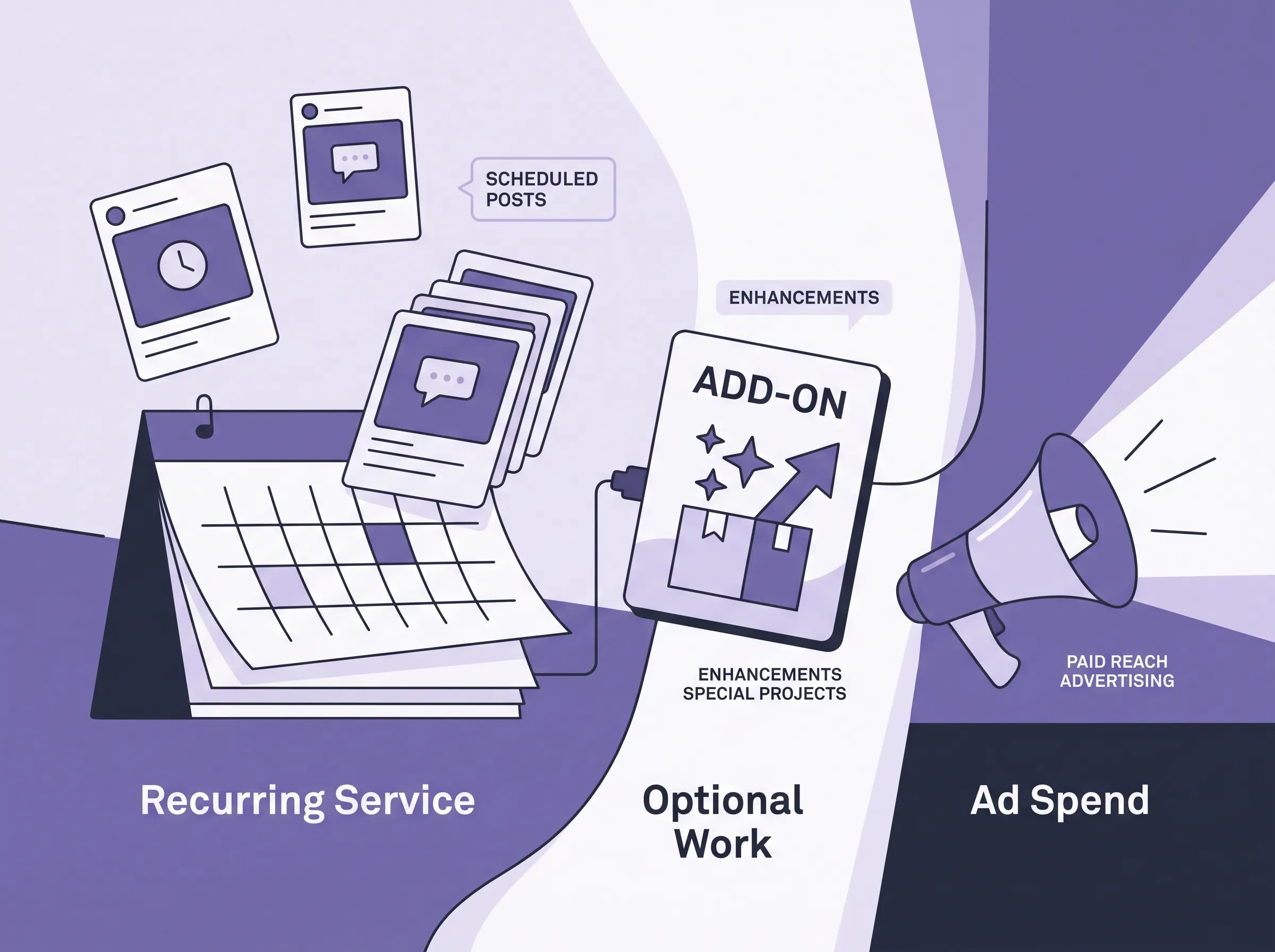
The fee should be traceable to the scope. State whether it covers recurring management, a one-time setup, or both. If paid advertising is proposed, separate the management service from the client’s media budget. List work that costs extra or falls outside the engagement.
Useful assumptions could include the number of channels, the content volume, a named client contact, and client-supplied photography. An exclusion might be daily community management, video production, or paid media spend. Include only assumptions that affect how the work is delivered or priced.
Avoid a single line such as “social media support: monthly fee.” A client cannot tell whether that means strategy, design, publishing, comments, or all of them. Break the fee into the parts the client needs to compare, and label one-time fees separately from recurring charges.
For related context, Indeed’s proposal guide, Airtable’s social media proposal guide, and Later’s proposal guide describe ways to connect the client’s situation with a recommended plan and its cost. Use their broad structure, then set the details from your own service and client conversation.
Close with a clear next step
End by telling the client what action moves the proposal forward and what happens afterward. You might ask them to select an option, confirm the scope, or book a discussion. If the proposal expires or the schedule depends on a decision date, state that date and why it matters.
Keep this step specific. “Let me know what you think” leaves the client to invent the process. A clearer next step names the choice, the person who responds, and what you will send or schedule after they do.
Then check that every promise in the proposal has an owner. The client should know what they provide, what you deliver, the delivery dates, and how a request outside the scope is handled.
A practical check before you send it
Before sending, read the proposal as if you had not joined the discovery call. Can you identify the goal, channels, deliverables, timing, client inputs, fees, exclusions, and next step without asking the writer to explain them?
Use this final check:
- Does the opening reflect the client’s actual request?
- Does every deliverable name its format, quantity, or limit?
- Are planning, creation, and publishing responsibilities clear?
- Are the client’s required inputs and decision points visible?
- Does each fee map to work, with advertising spend separated where relevant?
- Are guarantees, legal terms, or claims outside your control removed?
- Is the next action simple and explicit?
When the proposal misses one of these checks, revise its scope before polishing the layout.
Why trust this article
This guide is published by the Social Media Manager Kit team at Cosmo Suite. Fact-check: product references were checked against the live contents list on 4 November 2026. The bakery scenario is fictional and illustrates how to organize scope. It is not a client result or a pricing recommendation. The linked proposal guides were checked on the same date. Read About us and our editorial policy, or contact us with a correction.
Where Social Media Manager Kit fits
Social Media Manager Kit lists a client proposal alongside a discovery call checklist, services and pricing portfolio, contract file, planning documents, and content assets. Those files can give you editable places to organize the proposal and the work around it.
The kit does not choose your service scope, set your fees, write client-specific terms, or manage social accounts. You decide which files fit your process and adapt them to the client’s actual needs. Its proposal and planning materials for freelance social media work can sit alongside the Canva templates for adapting content to each client.
Frequently asked questions
What should a social media proposal include?
Include the client’s goals, the channels in scope, the work and deliverables, timing, responsibilities, fees, exclusions, and a clear next step. Make each item specific enough that the client can tell what is included and what would count as additional work.
How do I write a social media proposal for a new client?
Start with the client’s stated goals and current situation, then recommend a defined scope that connects to them. List deliverables, timing, client inputs, work limits, fees, exclusions, and the next step. Check every promise against the work you can provide.
How long should a social media proposal be?
Use enough detail to make the scope, fee, timeline, and responsibilities clear. A small, well-defined project may need a short document. A broader engagement may need more room for channel plans, deliverables, assumptions, and options. Remove material that does not help the client decide.
What is the difference between a proposal and a contract?
A proposal describes the recommended work and helps the client decide whether to proceed. A contract records the parties’ agreed terms. A proposal does not replace a contract. Have a qualified professional review legal terms for your situation.
Should pricing be included in a social media proposal?
Yes, if you are asking the client to choose paid work. Put the fee beside the scope it covers, separate one-time work from recurring service, and state any assumptions.
What should I leave out of a social media proposal?
Leave out guarantees you cannot control, vague promises such as ‘grow your audience,’ and tasks with no owner or limit. Do not include ad spend inside your service fee unless the proposal clearly separates them. Keep legal terms in a contract reviewed for your needs.
Sources
- Indeed Career Guide: How To Write a Social Media Proposal (With Template)
- Airtable: How to Create a Social Media Proposal
- Later: How to Create a Social Media Proposal
- Social Media Manager Kit: live contents list
- Cornell Law School Legal Information Institute: Contract (Wex)
- Cornell Law School Legal Information Institute: Agreement (Wex)